
History
Yerba mate belongs to the family Aquifoliaceae (Genus Holly). It is an evergreen tree, which naturally grows to be 8-10, sometimes even 16 meters tall. A cultured plant usually has a relatively short and gray stem, and a spreading dark green crown, the leaves have jagged edges. Yerba Mate flowers are small and white, the tree flowers from September to December. The drink is prepared from young leaves and late buds. The tree naturally grows in the subtropical climate of Argentina, Paraguay and southern Brazil.
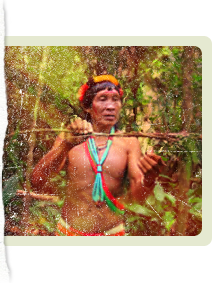
The first people who discovered the miraculous properties of yerba mate were Guarani Indians, representatives of an ancient civilization living on the territory of South America. Their traditional homeland is Paraguay, northern Argentina and southern Brazil. For centuries the Guarani have used mate as their daily drink, it was also fundamental to their medicinal system and has been revered as the drink of the gods.
It is believed that the earliest representatives of the Guarani people arrived on the South American continent about five thousand years ago. There is a legend according to which Guarani ancestors crossed the vast ocean from a distant land. But there is no credible evidence, where this nation came from originally and what was the level of civilization when they came to this land. We only know that it was already a culturally formed and established ethnic group. These were nomadic people who lived in the forests and were actively moving, effectively inhabiting places that they considered suitable.
Guarani Indians saw everything around them, all the flora and fauna, as a manifestation of divine power of the creator-god Tupa. And their whole life they sought to learn how to interact with this power in the space around them. According to the Indian legend, god Tupa created the first pair of humans out of clay, water, leaves of various plants and yerba mate juice. He bequeathed people to live in peace, harmony and love, and gave them the beautiful mate plant, which would give people power, knowledge and judiciousness. The Indians believed that through the process of preparing and drinking mate one can learn the nature of the external and internal space by filling one’s body and mind with divine energy.
For Europeans acquaintance with yerba mate coincided with their clash with the local Indian tribes during the time of Spanish conquistadors in the early 16th century. For the first time this culture was described in 1612 in the book "A Brief History of the Spanish conquest", according to the accounts of the officer Hernando Arias de Saavedra. In 1592 he was the first to discover these lands and remark on the use of yerba mate leaves. The Spaniard tells that the Indians with their weapons carried small leather pouches they called guaiac. There they kept chopped and lightly smoked leaves of mate tree (caá). Usually they chewed them or sipped an infusion of these leaves, using as a filter their teeth or a tube made of cane.
Spaniards suspected that these leaves give the Indians some special power and increase their endurance during long passages and daily labour. They wrote that the shamans of the tribes also used the drink to come into contact with a mysterious invisible force. The Spaniards named the leaves "The grass from Paraguay" - Illex Paraguayensis - not knowing that mate is actually a tree.
By the end of the 16th century first Jesuit monks came to the area, called on to convert the Indians to Christianity. This monastic order played a leading role in the colonization of the land in the valleys from Parana to Uruguay. From 1610 to 1767 there was an established Jesuit state. Monks created thirty settlements ("reductions"), where they trained, educated and forced to work one hundred thousand Indians.
In the beginning Jesuits considered mate a devilish drink, so dangerous that in 1610 the issue was brought up in a meeting of the Tribunal of the Holy Inquisition in Lima. Later Spaniards approved of the habit, and allowed the Indians to collect mate leaves. Their attention was drawn to the healing properties of the drink, noticing the ability of mate to quickly deal with scurvy, a disease of newly arrived settlers, which overtook them in the long journey across the ocean, affecting people who didn’t have the possibility to eat fresh fruit and have a variety of food.
After some time, yerba mate became a major source of income for Jesuits, who had acquired the right to trade this product in 1645. For mate collection Jesuits used Indian slave labour, and at first they were collecting yerba mate in the rainforest.
In 1670, yerba mate was already purpose-grown on the plantations, but the plant was not as persistent as the plants growing in the wild. It took many years of experience to grow high quality plants in the required amounts.
Europe became familiar with yerba mate in the late 17th century. The first samples of the plant were brought to the European continent in 1764, from the expedition of Louis de Bougainville. Since then mate was served in royal courts, and it was very expensive and wrapped in mystery. Catholic priests used it as an invigorating drink during long ceremonies and prayers.
In 1773, scared of their growing power, Pope Clementine XIII banned the Jesuit order, their state was destroyed and the reductions became empty. Monks left their lands, and Indians returned to the rainforest and continued to live as before the arrival of Spaniards. Growing yerba mate ceased for a while, and Indians went back to collecting the leaves of the plants in the rainforest where it grew naturally.
Eventually plants that were left on the Jesuits' plantations acclimated themselves, and plantations became privately owned. As gathering and production methods were already known, selling yerba mate once again became a profitable business.
Today, Argentina is the largest producer of yerba mate, the majority of which is consumed in South America, and the rest is exported to different countries.
It is believed that the earliest representatives of the Guarani people arrived on the South American continent about five thousand years ago. There is a legend according to which Guarani ancestors crossed the vast ocean from a distant land. But there is no credible evidence, where this nation came from originally and what was the level of civilization when they came to this land. We only know that it was already a culturally formed and established ethnic group. These were nomadic people who lived in the forests and were actively moving, effectively inhabiting places that they considered suitable.
Guarani Indians saw everything around them, all the flora and fauna, as a manifestation of divine power of the creator-god Tupa. And their whole life they sought to learn how to interact with this power in the space around them. According to the Indian legend, god Tupa created the first pair of humans out of clay, water, leaves of various plants and yerba mate juice. He bequeathed people to live in peace, harmony and love, and gave them the beautiful mate plant, which would give people power, knowledge and judiciousness. The Indians believed that through the process of preparing and drinking mate one can learn the nature of the external and internal space by filling one’s body and mind with divine energy.
For Europeans acquaintance with yerba mate coincided with their clash with the local Indian tribes during the time of Spanish conquistadors in the early 16th century. For the first time this culture was described in 1612 in the book "A Brief History of the Spanish conquest", according to the accounts of the officer Hernando Arias de Saavedra. In 1592 he was the first to discover these lands and remark on the use of yerba mate leaves. The Spaniard tells that the Indians with their weapons carried small leather pouches they called guaiac. There they kept chopped and lightly smoked leaves of mate tree (caá). Usually they chewed them or sipped an infusion of these leaves, using as a filter their teeth or a tube made of cane.
Spaniards suspected that these leaves give the Indians some special power and increase their endurance during long passages and daily labour. They wrote that the shamans of the tribes also used the drink to come into contact with a mysterious invisible force. The Spaniards named the leaves "The grass from Paraguay" - Illex Paraguayensis - not knowing that mate is actually a tree.
By the end of the 16th century first Jesuit monks came to the area, called on to convert the Indians to Christianity. This monastic order played a leading role in the colonization of the land in the valleys from Parana to Uruguay. From 1610 to 1767 there was an established Jesuit state. Monks created thirty settlements ("reductions"), where they trained, educated and forced to work one hundred thousand Indians.
In the beginning Jesuits considered mate a devilish drink, so dangerous that in 1610 the issue was brought up in a meeting of the Tribunal of the Holy Inquisition in Lima. Later Spaniards approved of the habit, and allowed the Indians to collect mate leaves. Their attention was drawn to the healing properties of the drink, noticing the ability of mate to quickly deal with scurvy, a disease of newly arrived settlers, which overtook them in the long journey across the ocean, affecting people who didn’t have the possibility to eat fresh fruit and have a variety of food.
After some time, yerba mate became a major source of income for Jesuits, who had acquired the right to trade this product in 1645. For mate collection Jesuits used Indian slave labour, and at first they were collecting yerba mate in the rainforest.
In 1670, yerba mate was already purpose-grown on the plantations, but the plant was not as persistent as the plants growing in the wild. It took many years of experience to grow high quality plants in the required amounts.
Europe became familiar with yerba mate in the late 17th century. The first samples of the plant were brought to the European continent in 1764, from the expedition of Louis de Bougainville. Since then mate was served in royal courts, and it was very expensive and wrapped in mystery. Catholic priests used it as an invigorating drink during long ceremonies and prayers.
In 1773, scared of their growing power, Pope Clementine XIII banned the Jesuit order, their state was destroyed and the reductions became empty. Monks left their lands, and Indians returned to the rainforest and continued to live as before the arrival of Spaniards. Growing yerba mate ceased for a while, and Indians went back to collecting the leaves of the plants in the rainforest where it grew naturally.
Eventually plants that were left on the Jesuits' plantations acclimated themselves, and plantations became privately owned. As gathering and production methods were already known, selling yerba mate once again became a profitable business.
Today, Argentina is the largest producer of yerba mate, the majority of which is consumed in South America, and the rest is exported to different countries.